Ernesto Garcia, PhD student at Konstfack, on care and repair
13 August 2026
Before the Right to Repair Directive (Directive (EU) 2024/1799) took full effect on 31 July 2026, the conference Care and Repair Day was organized with a focus on circular business models. Ernesto Garcia was one of many panelists talking about how care and repair is moving from a sustainability initiative to a cultural and commercial transformation.
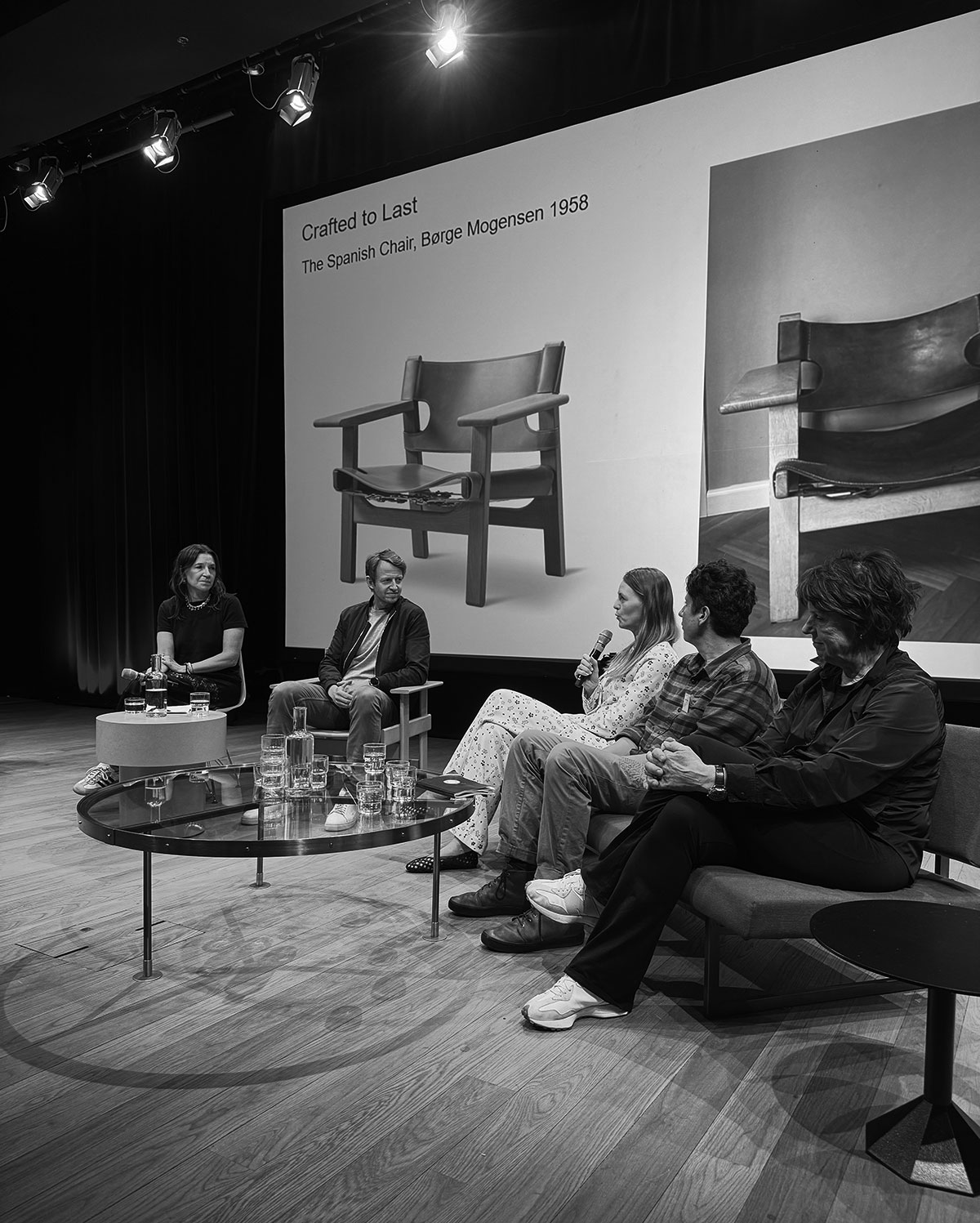
One of the Care & Repair Day’s discussions was titled "The Repair Revolution – Interior," featuring (from left) Anna Ryott (EY), Bjørn Fjellstad (Vestre), Mia Møgelgaard (Fredericia), Ernesto Garcia (Konstfack), and Mirkku Kullberg (Kasthall).
At the Modern Museum in Stockholm Stefan "Trendstefan" Nilsson and Act of Caring had organized the well-attended conference that gathered hundreds of designers, producers, brands and retailers from across Europe to challenge how care, repair and reuse can evolve from cost centers into competitive advantages.
As the "Right to Repair Directive" accelerates the shift, the conference explored what it truly takes to turn regulation into opportunity—and make longevity a viable business model. It forces makers of goods like washing machines, phones, and tablets to fix broken items outside the legal warranty. If you choose to repair instead of replace an item under warranty, your legal guarantee is extended by 12 months.
Many aspects of the topic was discussed during the day and interior architect and furniture designer Ernesto Garcia, PhD student at Konstfack, was invited to talk about his research in which he’s exploring the healing qualities that are embedded in the concept of repair. For his research, he makes continual repairs of objects and spaces in his surroundings.
"Repair is always happening. Otherwise, society would collapse. But many times unpaid or not well-paid. So it's something also to talk about, the labour of repairing."
In a discussion on why brands don’t tell us how to take care of things Ernesto Garcia was asked if and how the design universities are handling this.
His answer was:
"Yes, repair and circularity are taught. But it’s also about critical thinking and connecting to craftsmanship again. We are about five or six years ahead. Now it’s about designing for repair."
Directive (EU) 2024/1799 on common rules promoting the repair of goods
More info on Ernesto Garcia’s research: García, Ernesto
About the conference: Care & Repair Day