Furniture by Konstfack alumnus Lukas Carpelan acquired by Nationalmuseum
9 March 2026
Two years after graduating from Konstfack's Bachelor programme in Interior Architecture and Furniture Design, his "Henriksberg Cabinet" has taken its place in the museum's permanent design collection.
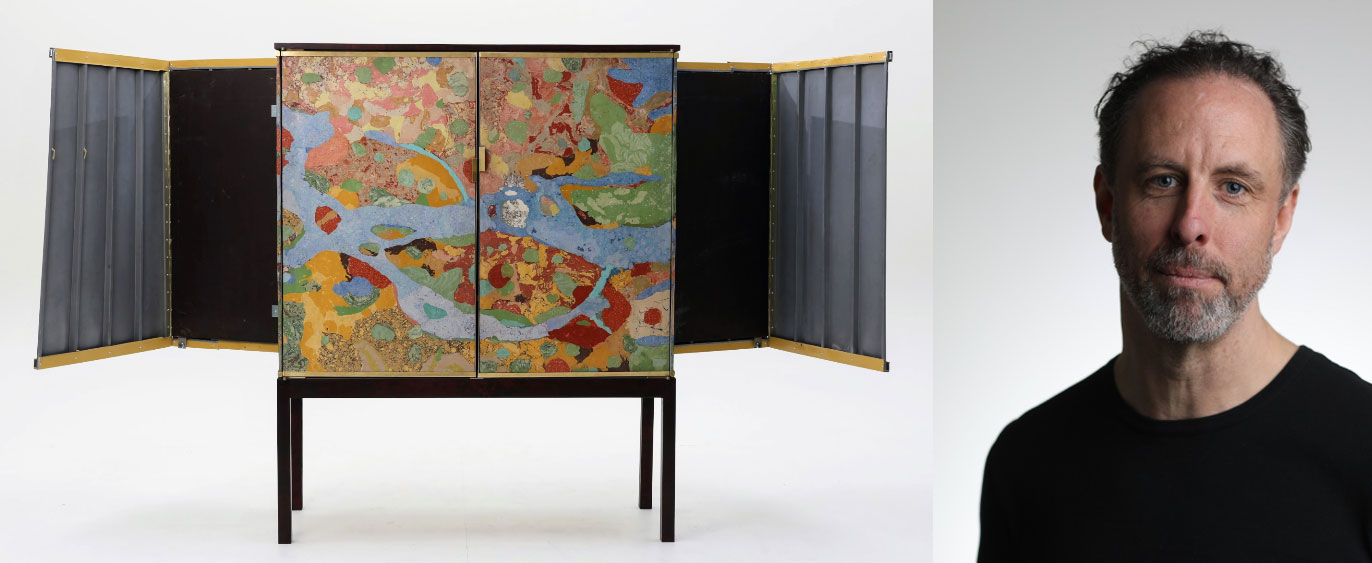
Designer Lukas Carpelan's Henriksberg Cabinet was already recognised in 2025 as one of the selected objects in the annual award and travelling exhibition Young Swedish Design (Ung Svensk Form). The inspiration for the piece emerged from a field course at Konstfack led by senior lecturer Rebecca Ahlstedt, where students explored the old industrial area of Henriksberg. The result was a piece of furniture imbued with symbolism and history, made using reclaimed materials, including sheet metal taken from the very oldest building in the Henriksberg industrial area – a physical representation of a fading culture.
Nationalmuseum has now acquired the work with the following justification: "The Henriksberg Cabinet tells the story of Stockholm's gentrification. It consists of two parts. The inner cabinet contains clear references to Josef Frank's furniture and printed patterns, with a surface of scagliola depicting a map of central Stockholm, where in practice only affluent people can afford to live. A pair of outer doors made of corrugated sheet metal tell of a different reality in terms of living conditions and material choices. The metal comes from an older industrial building in the suburb of Henriksberg. An artists' collective once worked there in premises on temporary demolition contracts, which means that even the city's outer areas are now on their way to being gentrified. The cabinet is a commentary on this development."
Scagliola is an Italian technique used to imitate marble by creating a compound of plaster, glue and pigments. The choice of technique therefore not only references older building materials but can also be discussed in terms of a "false surface" – presenting a "cheap" material so that it appears exclusive. Perhaps, ultimately, the gentrification of the city is about displaying economic success through surface appearance?